 |
|||

|  |

|
|

October 9, 2026 |
|||||
| Led by the next generation, Crave Brothers Farmstead Cheese expands, adds Burrata | |||||
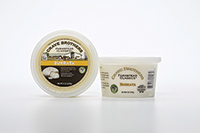
By Rena Archwamety WATERLOO, Wis. — On the afternoon of Sept. 3, a morning rain had just let up, and friends, family, colleagues and other special guests of the Crave family gathered in front of the newly-expanded facilities of Crave Brothers Farmstead Cheese in Waterloo, Wisconsin, to celebrate the launch of the company’s latest cheese — Burrata. “One of the greatest strengths of the cheese industry is the way people come together to support one another,” says Roseanne Crave, sales and marketing manager and owner, Crave Brothers Farmstead Cheese. “We were fortunate to welcome attendees from across the country to our Burrata Launch celebration, including customers, family, friends, employees, cheesemakers, researchers, industry organizations, elected officials, state leaders and Bishop Donald Hying.” Hying, Fifth Bishop of the Catholic Diocese of Madison, Wisconsin, provided a blessing before guests were invited to sample the new cheese and tour the plant expansion. After reading the creation story from the book of Genesis, he presented the Crave family with a framed picture of St. Lucio, the patron saint of cheesemakers. In addition to Hying and members of the Crave family, state and industry leaders also spoke that morning, congratulating the Crave family on their continued success and innovations in their farmstead cheese and dairy operation. “This network has supported us in many ways, from the technical expertise of the Center for Dairy Research and the promotional efforts of Dairy Farmers of Wisconsin, to the guidance of industry partners, grant organizations and the customers who encouraged us to pursue Burrata in the first place,” Crave says. “Our employees, construction partners and local community were also instrumental in completing the expansion and preparing for the launch.” After a year of planning and engineering, Crave Brothers broke ground on its plant and office expansion in June 2025. Its new office space was completed early this year, followed by its production expansion, which opened this summer. The expansion now is open and operational, while work continues to add further equipment and increase production capacity over time. “Burrata was one of the primary drivers behind our expansion, but the project was also designed to support the continued growth of our entire cheese operation,” Crave explains. “We added approximately 40,000 square feet of production space, expanded our laboratory, invested in new production equipment, updated employee welfare areas, and rebuilt and expanded our offices.” • Support for Burrata U.S. Sen. Tammy Baldwin, D-Wis., opened the lineup of speakers at the launch event, declaring that “Wisconsin farmers and processors truly work harder than anyone I know.” She highlighted the Dairy Business Innovation Initiative, which helps small and mid-sized dairy businesses secure funding for startups, expansions and other projects. Baldwin also put in a good word for Burrata, a Fresh Mozzarella ball with a center filled with cream and shreds of Fresh Mozzarella called “stracciatella.” “You’ve probably heard the expression, ‘this is the best thing since sliced bread’ ... I use that expression very sparingly,” Baldwin says. “But the first time I ever tasted Burrata, I said, ‘My gosh, this is the best thing since sliced bread.’” Crave notes that her family’s company received support from a number of state and industry organizations to help make the expansion and new Burrata launch possible. The Center for Dairy Research played an important role in helping Crave Brothers work through technical cheesemaking questions during the development process. Dairy Farmers of Wisconsin also continued to support the company by promoting Wisconsin cheese and helping to generate customer excitement around the new product. Additionally, Crave Brothers received support through several grant programs, including funding from the Dairy Business Innovation Alliance and the Wisconsin Department of Agriculture, Trade and Consumer Production. When deciding on the next cheese to develop, Crave says Burrata was a natural extension of Crave Brothers’ award-winning fresh cheese lineup. “Customers had inquired about it for years,” she says. “After several trips to Italy, many dinners at Italian restaurants and watching Burrata’s popularity grow in the marketplace, we decided to take the leap. We initially experimented with an industry partner to co-pack the product but ultimately realized this was something we wanted to produce in-house and make uniquely our own.” She adds that Crave Brothers is excited to offer true farmstead Burrata that brings together its award-winning Fresh Mozzarella and cream from its own dairy farm. “It complements our existing lineup while giving our customers a fresh, on-trend product with the quality and farmstead story they have come to expect from Crave Brothers Farmstead Cheese,” Crave says. In developing Crave Brothers’ own farmstead Burrata, Crave says some of the most valuable research came from visiting stores and restaurants to experience different Burrata products on the market. “This allowed us to identify attributes we liked and disliked, evaluate quality and presentation, and discover creative ways chefs and consumers are using Burrata,” she says, The R&D process also combined technical expertise and consumer insights with firsthand market research. Crave Brothers worked with students from the University of Wisconsin-Madison to study consumer trends and explore how to best position the new product within the company’s brand. The Center for Dairy Research also helped work through technical cheesemaking questions, and Crave Brothers refined the product and production process. Crave Brothers General Manager Adam Falbo and the in-house team went through many trials producing the stracciatella, brine formation, shell consistency, label design and product eye appeal. “The feedback we have received throughout the development process has been both constructive and positive,” Crave says. “Guests at our September Burrata launch celebration especially enjoyed the balance between the Mozzarella shell and creamy stracciatella filling, the fresh cream flavor and the product’s overall quality.” • Launch to the future Crave Brothers officially will begin producing Burrata for a soft launch with select partners this month, allowing the company to gather feedback from customers and consumers while its production team refines the process and builds consistency and efficiency. From there, production capacity will gradually increase and distribution will expand, with the goal to offer Crave Brothers Burrata to a broader range of customers beginning early next year. The initial offering will consist of an 8-ounce container holding two 4-ounce Burrata balls in brine, packaged six containers per case. The product will have a 33-day shelf life from the date of production. “Each Burrata features a delicate Fresh Mozzarella shell filled with creamy stracciatella,” Crave says. “The fresh milk and cream flavors carry through each ball, creating a rich, balanced product suited for retail shoppers, restaurants, catering and other foodservice applications.” She adds that Burrata is unique because the traditional retail cup format also works especially well in back-of-house foodservice applications. “Since Burrata is a delicate cheese, smaller format packaged cups help protect the balls and ensure they perform consistently for chefs and other foodservice uses,” Crave says. Along with the new Burrata launch, Crave says the company’s Fresh Mozzarella, Oaxaca and Mascarpone have had an especially strong year, earning significant recognition in cheese competitions. At the 2026 American Cheese Society competition, all three products received first-place awards. Crave Brothers also recently swept the Fresh Mozzarella category at the dairy products competition held in conjunction with World Dairy Expo. “The awards reflect the quality and consistency that continue to drive interest in our core product lineup,” Crave says, adding that Crave Brothers always is listening to its customers, exploring ideas and considering future opportunities. Roseanne Crave, daughter of co-founders George and Debbie Crave, is among the second generation leading the family cheese and dairy business into the future. “I am honored to be part of the next generation of leadership at Crave Brothers,” she says. “We have had wonderful leaders to learn from, and I feel a strong responsibility to carry forward the values and practices that built our family business.” One of the most important pillars of the family business is the people who support it, Crave adds. She notes that the Burrata launch would not have been possible without Crave Brothers’ talented teams across both its farm and cheese factory, including its agronomy team, milkers, herdsmen, maintenance crew, quality team, cheesemakers, production, packaging, shipping, customer service and office staff. “Our employees work alongside our family toward a shared goal: producing high-quality cheese that we are proud to put our name on,” she says. “Open communication, teamwork, consistency and a willingness to listen to new ideas and feedback will continue to guide us. One of the special things about a family business is the ability to build meaningful relationships with the people who work with you, your customers and your community.” CMN |
|||||

| CMN article search |
   |
|
|
© 2026 Cheese Market News • Quarne Publishing, LLC • Legal Information • Online Privacy Policy • Terms and Conditions
Cheese Market News • Business/Advertising Office: P.O. Box 24 • Sun Prairie, WI 53590 • 608/831-6002
Cheese Market News • Editorial Office: 5315 Wall Street, Suite 100 • Madison, WI 53718 • 608/288-9090