 |
|||

|
 |

|
|

|
|

|
|

April 5, 2024 |
||||||
| Sargento innovates with new snack cheeses for consumers of all ages | ||||||
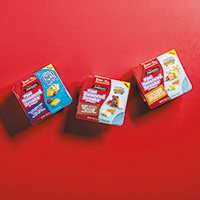
By Rena Archwamety PLYMOUTH, Wis. — Sargento Foods Inc., the No. 1 national branded company in the natural snack cheese category, has a long-term vision to be the most innovative, best-loved real food company in the country. From being the first company to introduce prepackaged shredded cheese to customers, to its most recent rollouts of Fun! Balanced Breaks and flavored String cheese, Sargento continues its 70-year legacy of pioneering natural cheese products. “Our ability to build brands with consumers, our ability to continue innovating, and to develop and leverage the Sargento brand, started here with my grandfather over 70 years ago,” says Louie Gentine, CEO of Sargento Foods Inc. and third-generation family owner. Sargento was founded in 1953 in Plymouth, Wisconsin, by Leonard Gentine. He and his design partner Bill Lindstedt developed a system to vacuum seal cheese in plastic, a groundbreaking new packaging method that allowed cheeses to last longer. Soon after, Sargento would improve this technology and add new processing methods to introduce prepackaged sliced and shredded natural cheese to the industry. Sargento also introduced the peg bar display to dairy aisles in grocery stores in 1969, helping to raise the profile of its cheeses. More recently, Sargento has continued leading natural cheese innovations with its Ultra Thin Slices, introduced in 2012, and Balanced Breaks, introduced in 2015. Both these products are winners of the Nielsen Breakthrough Innovation Award. Louie Gentine notes that Balanced Breaks is the branded category leader in multi-component snacking at retail. “Insight from a consumer standpoint is what drove and created Balanced Breaks,” he says. “Consumers are eating differently — not just today, but for the last 10-15 years. Snacking is a big part of how consumers eat today. They’re eating throughout the day, eating wholesome snacks. The natural cheese leverages consumers’ desire for more protein in their diet.” The original Balanced Breaks paired natural cheese with dried fruit and nuts. Sargento also has introduced Sweet Balanced Breaks pairing natural cheese with bits of chocolate, as well as a cheese-and-cracker line in partnership with Mondelēz International. Sargento currently offers more than 20 varieties of Balanced Breaks. • Sweet and bold Last month, Sargento debuted its latest variety, Fun! Balanced Breaks, which pairs 100% real, natural cheese with cookie favorites from Mondelēz. Available in three varieties, these include: Mild Cheddar Cheese with Cocoa Yogurt Flavored Covered Raisins and Mini CHIPS AHOY! Cookies; Monterey Jack Cheese with Mixed Fruit Snacks and TEDDY GRAHAMS Cocoa Graham Snacks; and Colby-Jack Cheese with Mixed Fruit Snacks and TEDDY GRAHAMS Honey Graham Snacks. Gentine notes that the new Fun! Balanced Breaks offer an ideal balance of wholesome cheese along with a treat, pleasing both kids and parents. “When I look at insight on Fun! Balanced Breaks, it’s really providing parents with additional choices for their kids to snack on,” he says. “What I like is that you get the treat of the cookie, but also natural cheese to go with it. Consumers are desiring convenient portable snacks for their kids. It’s not just what parents want, but what kids will enjoy. The name says it, it’s all about a balanced break, offering a bit of a treat for their son or daughter while also getting the wholesomeness of what natural cheese gives to the item.” In addition to the new Fun! Balanced Breaks, Sargento has rolled out two new String cheese flavors, geared toward adults who crave bolder snack cheese flavors. Sargento Smokehouse String Cheese Snacks feature a rich, hickory flavor, while Sargento Fiesta Pepper String Cheese Snacks offer the heat from jalapeño and habanero peppers, balanced out with the mild, creamy taste of Mozzarella. “We’re really excited about these two new items coming out of our St. Cloud, Wisconsin, String cheese facility,” Gentine says. “As adult consumers consume a lot of String cheese — 60% to 65% is consumed by adults — when you look at the varieties in the dairy case, it really is mostly traditional String cheese. As consumers, adults are looking for variety, and the trends they are desiring are to add more bold flavors into their snacking occasions.” Sargento began shipping these new products to its customers across the country at the beginning of the year and is investing a fair amount of advertising and promotional support behind the items. “It’s early, but we’re feeling great about these innovations and bringing them to our consumers this year,” Gentine says. • Family legacy Succeeding his father, Lou Gentine, as the third-generation leader of Sargento since 2013, Louie Gentine says he is “extremely proud to be in the position I am in,” leading 2,500 employees and members of the “My grandfather 70 years ago started the company and built the foundation, which has been grounded really in how we view Sargento — hiring good people and treating them like family,” Louie Gentine says. “It’s something my dad, Lou, and uncles carried on in the second generation, and with my cousin’s husband Mike McEvoy (executive vice president, operations) in the third generation, building on that critical foundation that my grandfather started. Over the last 70 years, our focus has been on innovation and building brands. It goes back to the very beginning.” Sargento recently was recognized for its dedication to its family of employees, as it was named the United Way of Sheboygan County’s top “Most Generous Workplace.” “We’re very grateful for the work everyone does day in and day out to build that long-term success and allow us to do great things,” Gentine says. “We offer great benefits for our employees so they can build their own livelihoods and make investments back into our community, making it stronger and a great place for us to raise our families and run our businesses.” Sargento is actively involved each year in giving back to its community through partnerships with the Green Bay Packers, Milwaukee Bucks and the Milwaukee Brewers to support local organizations such as the Hunger Task Force and Milwaukee Habitat for Humanity. Its 21-year program with the Green Bay Packers, Touchdowns for Hunger, has donated more than $1.8 million toward hunger relief. This past season, Sargento donated $88,000 to the Hunger Task Force after 44 touchdowns from the Packers. Sargento’s Double Helping for Hunger initiative with the Brewers also has been fighting for hunger relief since 2018. Tipoffs for Homes, Sargento’s partnership with the Milwaukee Bucks, has been going strong for five years and donates $500 to the Milwaukee Habitat for Humanity with each tipoff that the Bucks win. • Future success Gentine says the central focus of Sargento is how it does business for the long term, and that the company is fortunate to have a group of employees who understand that philosophy and, as a result, can deliver long-term success. As Sargento has been innovating for the past 70 years, Gentine says customers know and expect that it has a lot of new items in its innovation pipeline. “We’re leveraging continued opportunities in snacking as well as the meal segment, opportunities to continue to meet consumer needs in those areas,” he says. Gentine adds that Sargento takes a lot of pride in the fact that it supports not only its own products, but the entire category, through very aggressive promotional activity. This helps to bring a lot of excitement to the broader natural cheese category. “We’ve had a lot of success, and we feel very confident about our success going forward,” he says. “Our success really hinges on the fact that we have amazing people working tirelessly every single day, sharing that passion my grandfather had and building long-term stakeholder value. We build on innovation for consumers, build our brands and find ways to do things better. This is really driven by the Sargento family, our employees.” CMN |
||||||

| CMN article search |
   |
|
|
© 2024 Cheese Market News • Quarne Publishing, LLC • Legal Information • Online Privacy Policy • Terms and Conditions
Cheese Market News • Business/Advertising Office: P.O. Box 628254 • Middleton, WI 53562 • 608/831-6002
Cheese Market News • Editorial Office: 5315 Wall Street, Suite 100 • Madison, WI 53718 • 608/288-9090